.svg "truvio_logo")


Organizations should consider a PIM when product data is spread across systems, difficult to maintain, or inconsistent across channels. It’s especially relevant for businesses managing many products, variants, languages, or sales channels and needing better control and efficiency.






Why Truvio PIM?
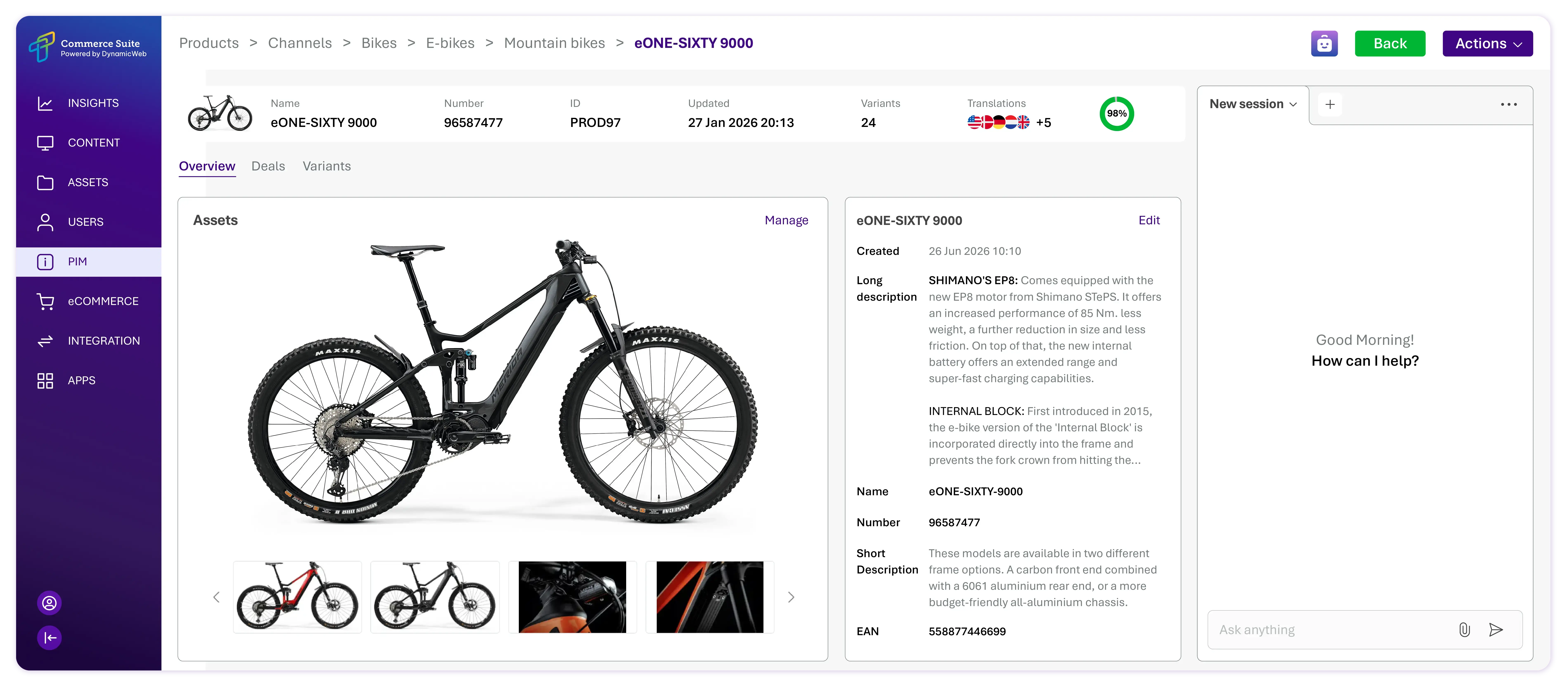
Truvio PIM empowers fast-growing businesses to take full control of product data — ensuring accuracy, efficiency, and consistency across every channel so you can increase conversions, reduce errors, and scale with confidence.

Create a single-source-of-truth for your product data
Centralize all product information in one system to ensure accuracy, consistency, and faster collaboration across teams.
Streamline enrichment workflows
Enrich product content with structured workflows that improve data quality and speed up time to market.
Automate with AI to save time and reduce errors
Use intelligent automation to simplify repetitive tasks, minimize manual effort, and keep product data up to date.
Distribute consistent, rich product data
Deliver complete, channel-ready product information across eCommerce, marketplaces, catalogs, and partners.
Improve customer experience and increase sales
Create better buying journeys with richer product content that boosts conversions and reduces returns.
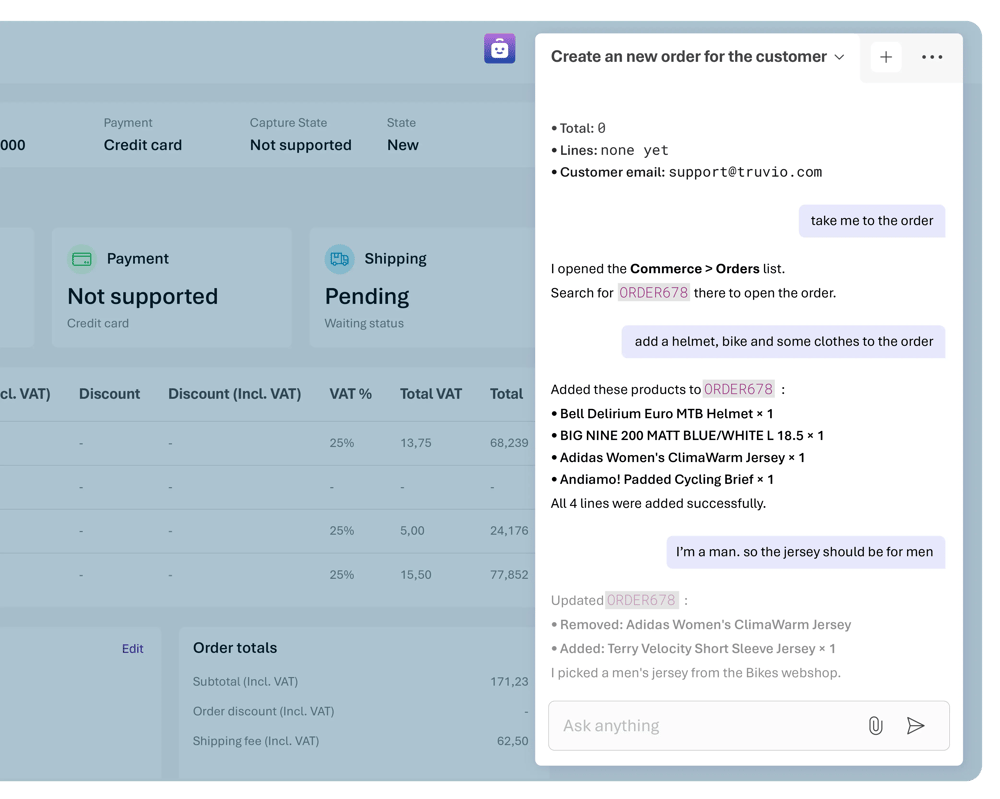
Agentic AI - now in Truvio PIM
Manage your product data in plain language
Dynamo, the built-in AI agent in Truvio Commerce, connects directly to your product data. Describe the products and the structure you need, and let the AI do the heavy lifting - from creating products to keeping the data complete and consistent.
-
Create and update products one at a time or thousands at once.
-
Shape the data model: fields, categories, variants and product groups.
-
Set completeness rules and workflows so nothing goes live half-finished.
-
Build product queries to find and work on exactly the right products.
-
Manage product images and digital assets, feeds and datasets.
-
Translate product data into every language you sell in.
-
Let AI fill in the missing fields for you, product by product.

"We are very satisfied with Truvio Commerce (powered by DynamicWeb). It has been a win-win outcome for us, since it provides all of the functionality we need, and a reasonable price – and with the opportunity to scale with the business."

“With our new platform, we’re not just digitally up to date - we’re ready for what’s next.”

"The transition to Truvio Commerce (powered by DynamicWeb) has been an important milestone for us. We now have a modern, user-friendly, and future-proof platform — and a solution that we can continue to develop as our business grows.“

"We see a lot of added value with our solution, simply in the sense that we save an extreme amount of time."

"With this new solution, customers have access to see all of their invoices and orders without having to call us. It’s not just placing orders through the webstore - they now have full visibility into what they’re doing with us. Another improvement I’ve seen is that we now have this great web presence. It’s a much better overall experience."

"We now have a platform that is more user-friendly, clearer, and easier to understand. It makes everything simpler."

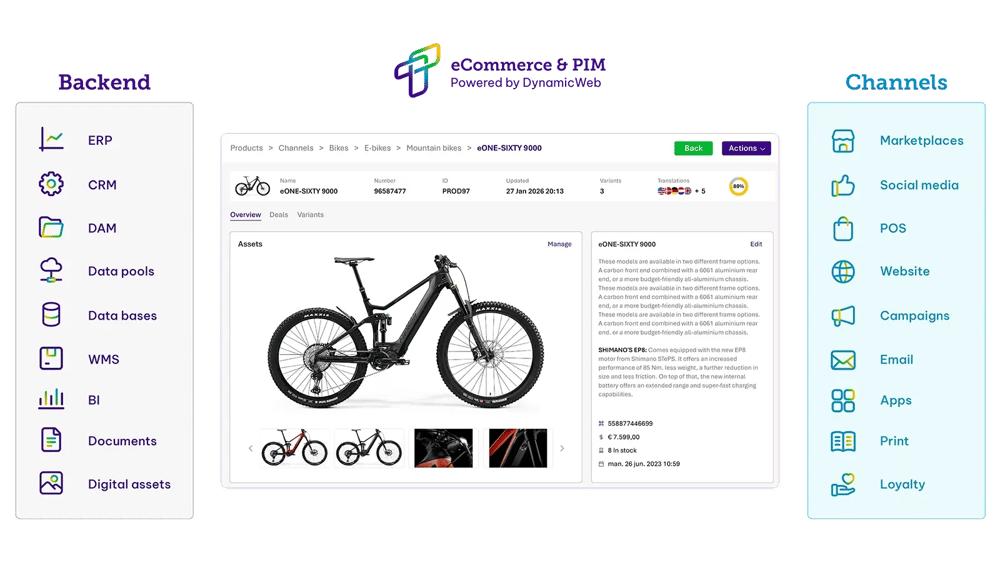
One Source of Truth for Accurate Product Data with Truvio PIM
Truvio PIM centralizes product information from multiple systems—including ERP, CRM, and supplier feeds—so your teams always work from consistent, reliable data while reducing costly errors.
Seamlessly sync pricing, inventory, and product attributes with your ERP, consolidate complex B2B catalogs into a single repository, and manage configurable product data at scale. With automation for bulk updates and built-in validation against internal and external standards, Truvio PIM helps ensure compliance, efficiency, and faster time-to-market across all channels.
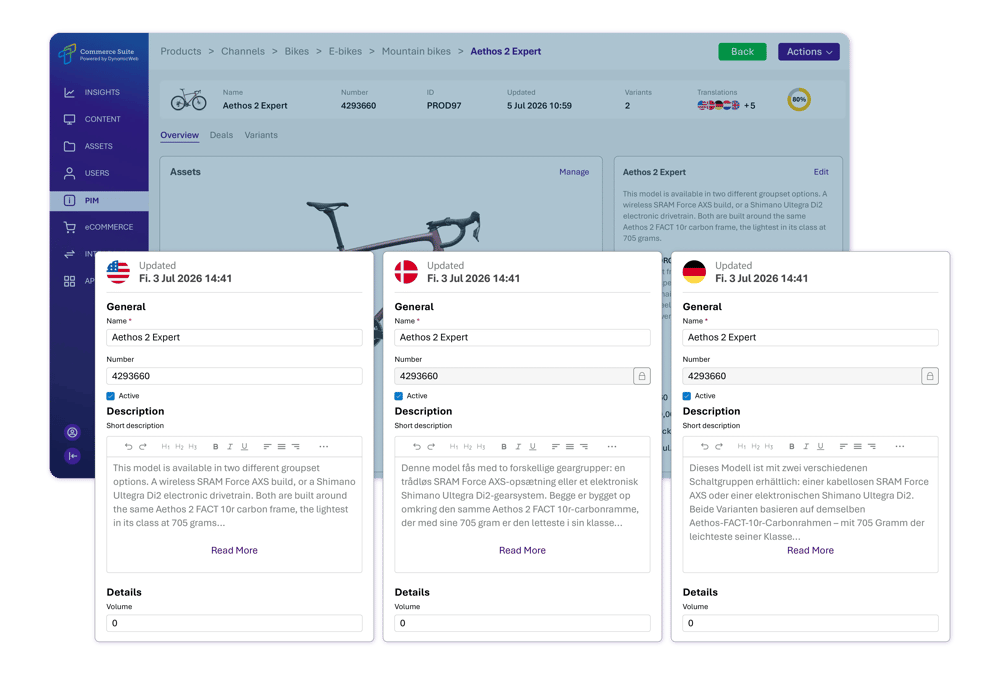
Deliver Accurate Product Content to Every Channel with Truvio PIM
Truvio PIM streamlines product enrichment and distribution, making it easy to deliver complete, accurate product information across eCommerce, marketplaces, catalogs, and sales channels—while supporting ERP-driven business rules.
Standardize workflows across teams, automate enrichment and approval processes, and publish consistent product data at scale. With built-in support for multi-language, multi-currency, and multi-market catalogs, Truvio PIM helps improve customer experience through rich, detailed, and error-free product content wherever you sell.
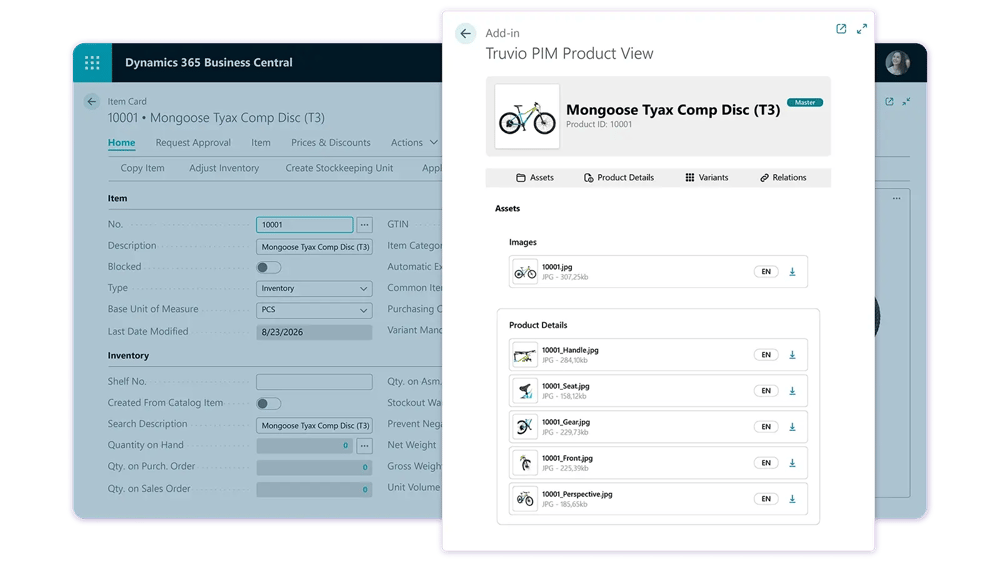
Truvio PIM Built for Microsoft Dynamics 365 Business Central
Truvio PIM is tailored for Microsoft Dynamics 365 Business Central, enabling you to enrich and manage product information directly within your ERP. Centralize product data, media assets, and translations in one place while supporting multiple languages, formats, and unlimited product fields.
Keep products, variants, and attributes aligned across systems, add rich descriptions and content with less effort, and ensure consistent product experiences across every channel. With easy installation via AppSource, Truvio PIM delivers fast value with minimal setup and low risk.