.svg "truvio_logo")


Truvio Commerce Suite helps organizations manage complex digital commerce scenarios by bringing product information, content, and commerce into one unified platform. It addresses challenges such as fragmented systems, inconsistent product data, complex pricing and business logic, and the need to support multiple brands, stores, and channels at scale.
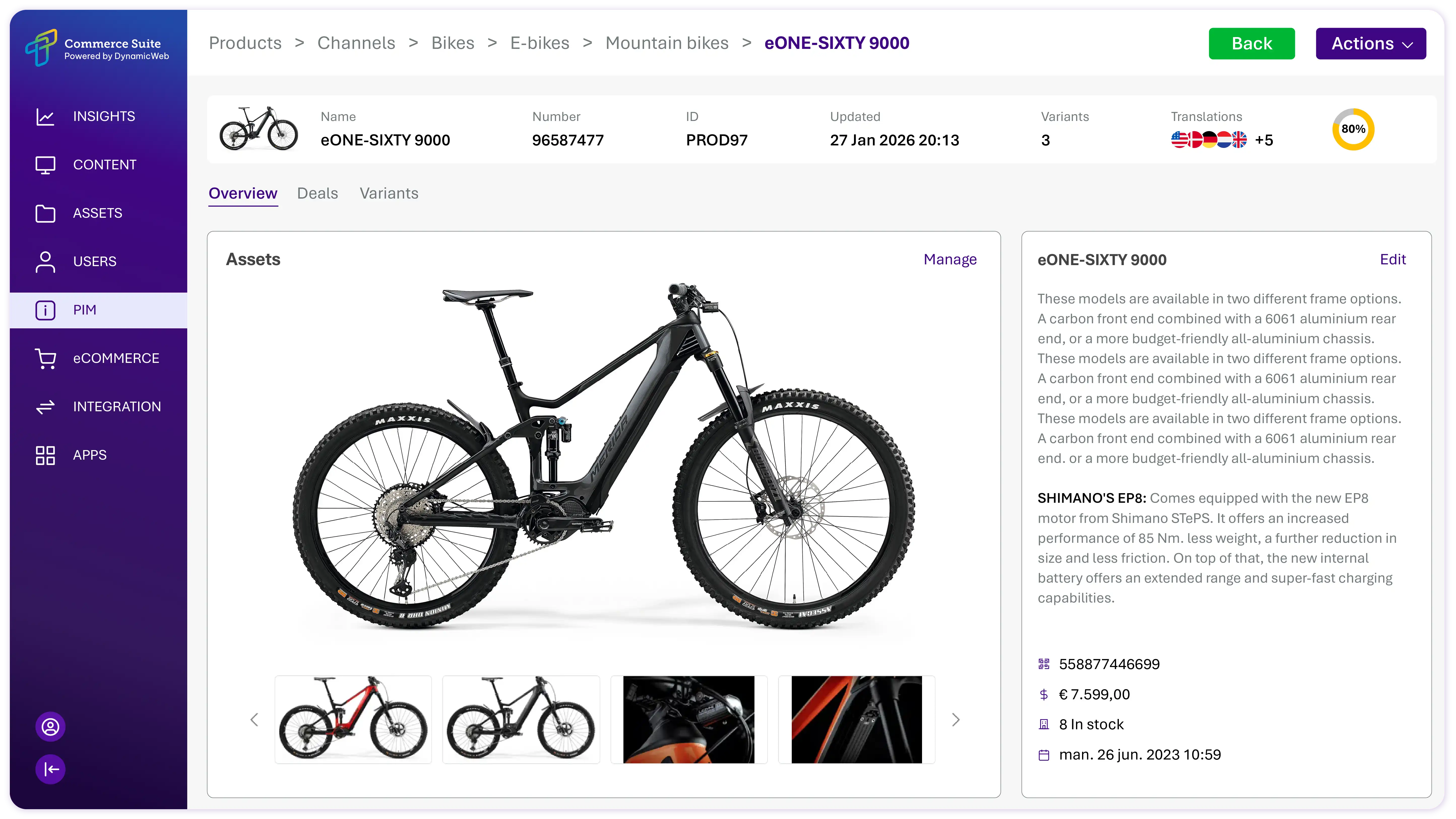
Why Truvio Commerce Suite?
Truvio Commerce Suite enables you to build and run brand sites, eCommerce and self-service portals that provide best-in-class customer experiences.

Unified Commerce Platform
Bring eCommerce, content, and product data together in one platform to deliver consistent experiences across all digital channels.
One Platform, One ERP Experience
Run commerce directly on ERP data with real-time pricing, inventory, and business logic for accurate, efficient selling.
Multi-Brand & Store Flexibility
Manage multiple brands, storefronts, and markets from one solution without duplicating data or complexity.
Headless & MACH-Ready Architecture
Build flexible, future-proof commerce experiences using APIs and modern architecture without vendor lock-in.
Portals & Scalable Commerce
Empower customers with self-service buying, ordering, and account management that scales as your business grows.
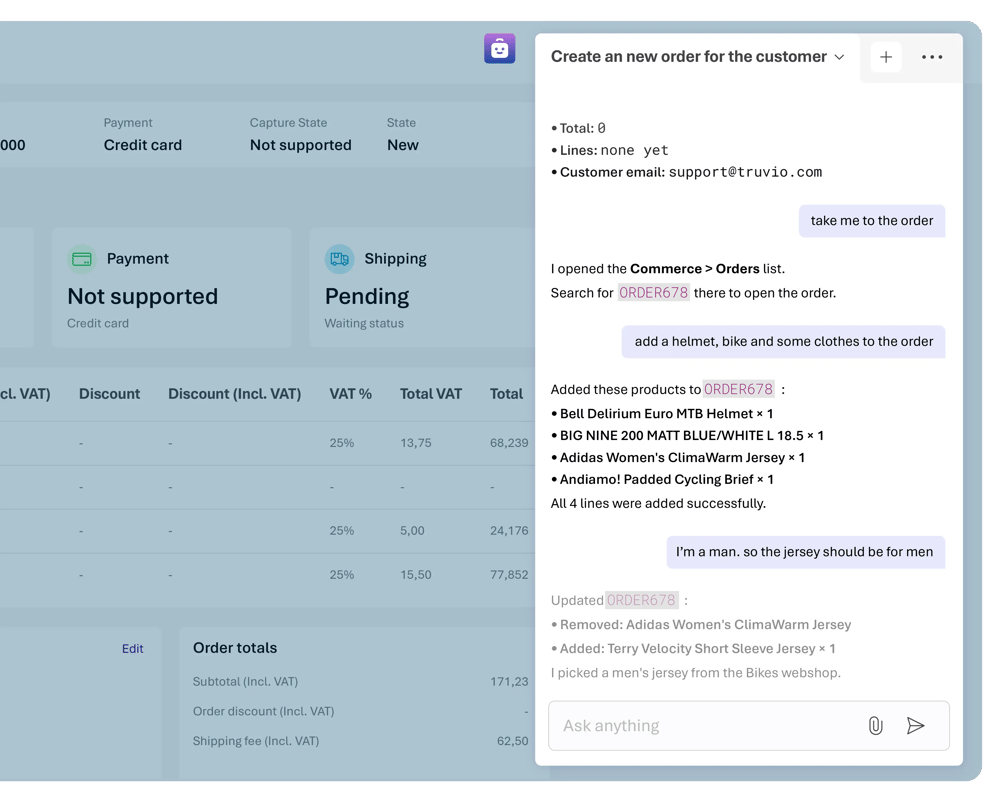
Agentic AI - now in Truvio Commerce Suite
Manage Truvio Commerce in plain language
Dynamo - the built-in AI agent - connects directly to your eCommerce data. Update pricing, enrich product catalogues, manage orders, and set up promotions by describing what you need. No forms. No navigation. No manual workflows.- Context-aware from the start. Dynamo sees what you're looking at and acts on it, no need to paste in product IDs or re-describe your current view.
- Governance built in, not bolted on. Agent permissions are scoped independently from user roles, you control exactly what Dynamo can read, create, or modify.
- Every capability, available to agents. The full eCommerce API is exposed via the Backend MCP Server, anything a human can do in the interface, an agent can do programmatically.

"We are very satisfied with Truvio Commerce (powered by DynamicWeb). It has been a win-win outcome for us, since it provides all of the functionality we need, and a reasonable price – and with the opportunity to scale with the business."

“With our new platform, we’re not just digitally up to date - we’re ready for what’s next.”

"The transition to Truvio Commerce (powered by DynamicWeb) has been an important milestone for us. We now have a modern, user-friendly, and future-proof platform — and a solution that we can continue to develop as our business grows.“

"We see a lot of added value with our solution, simply in the sense that we save an extreme amount of time."

"With this new solution, customers have access to see all of their invoices and orders without having to call us. It’s not just placing orders through the webstore - they now have full visibility into what they’re doing with us. Another improvement I’ve seen is that we now have this great web presence. It’s a much better overall experience."

"We now have a platform that is more user-friendly, clearer, and easier to understand. It makes everything simpler."

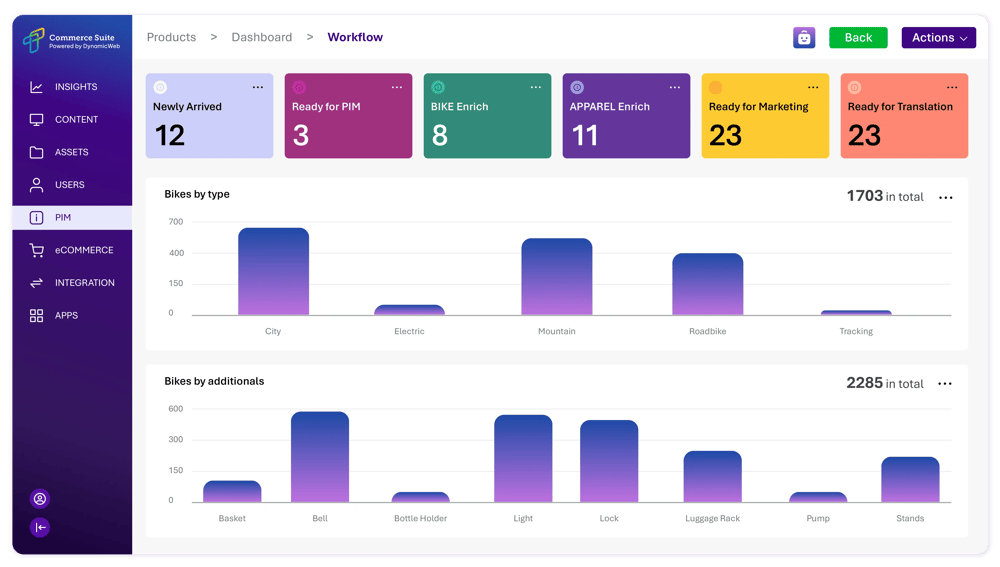
How Truvio solves core challenges for product-centric B2B companies
Truvio addresses the most common challenges faced by product-centric B2B businesses by unifying eCommerce and Product Information Management (PIM) in one integrated platform. The solution supports highly complex commerce setups with advanced, customized business logic while maintaining consistency, efficiency, and scalability.
With Truvio, you can manage and enrich product information at scale, handling millions of data points to establish a single source of truth and ensure accurate information across every channel. Running natively inside Microsoft Dynamics 365, Truvio delivers a seamless ERP-centric experience without disconnected systems or added complexity.
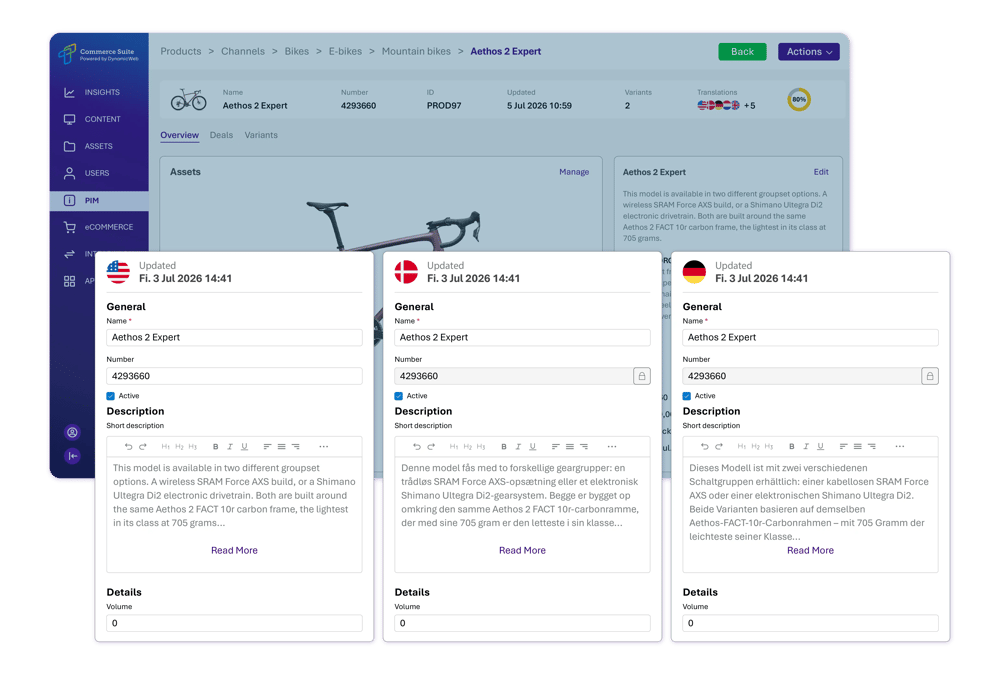
PIM: One source of truth for all your product data
Truvio PIM centralizes product information from ERP, CRM, and external data sources into one reliable system. By consolidating and synchronizing product data, your teams always work with accurate, up-to-date information while reducing errors, improving efficiency, and supporting consistent product experiences across all channels.
Integrated seamlessly with your ERP, Truvio PIM keeps pricing, inventory, and product attributes in sync while enabling you to manage complex B2B catalogs with configurable attributes and variants. Automated bulk updates and built-in governance ensure compliance with internal standards and external requirements, helping you scale product data management with confidence.
eCommerce: Enterprise-grade commerce built for growth
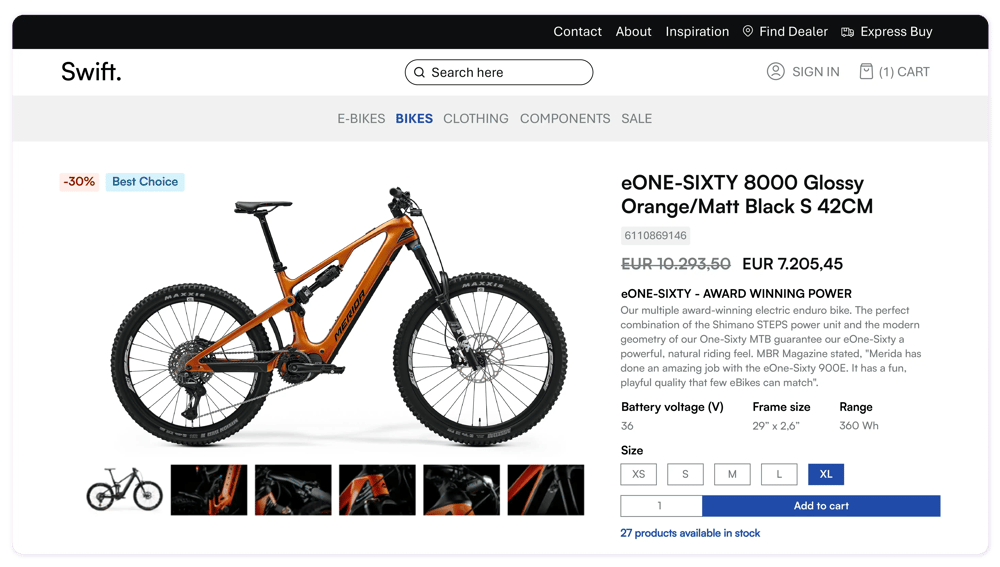
Truvio eCommerce accelerates online growth with a scalable, flexible commerce platform fully integrated with your ERP and CRM. By unifying commerce, content, and product management in one solution, Truvio enables smarter selling, consistent experiences, and efficient operations across all digital channels.
The platform supports B2B, B2C, and D2C business models without technical limitations, leveraging real-time ERP and CRM integrations for pricing, inventory, and business logic. With headless APIs, built-in marketplace and multi-store capabilities, and native support for multiple languages and currencies, Truvio delivers the flexibility and control required for modern, enterprise-grade eCommerce.
CMS: Build and manage content without limits
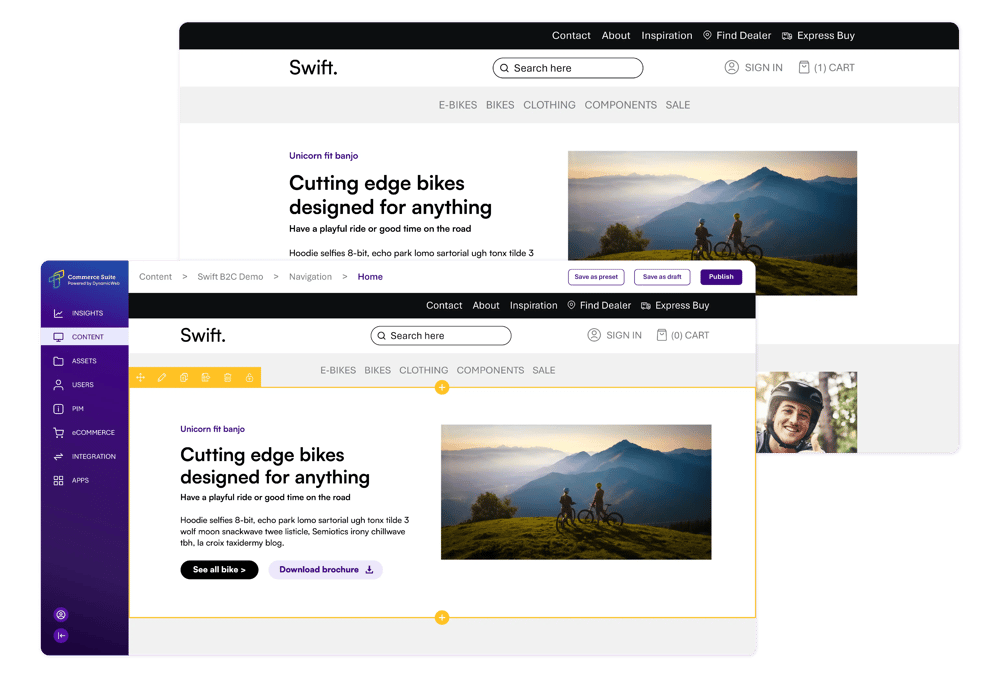
Truvio CMS lets you create and manage powerful digital experiences on a scalable platform that balances ease of use for editors with full flexibility for developers. Visual editing tools enable fast page creation, while full access to code supports advanced customization when needed.
With component-based content, teams can maintain consistent design across channels, and role-based permissions ensure the right level of control for editors and developers alike. Built to support both marketing agility and technical freedom, Truvio CMS helps you move faster without compromising structure or scalability.